🏠 Free samples on orders over $500 — Request yours today

130 Years of Armstrong Flooring — Who We Are and Why It Matters

We started in 1860 making cork stoppers in a Pittsburgh loft. By the 1890s we were covering floors. Today we're one of the most specified flooring and ceiling brands in North America — because we've never stopped asking what a better floor actually means to the people who use it.
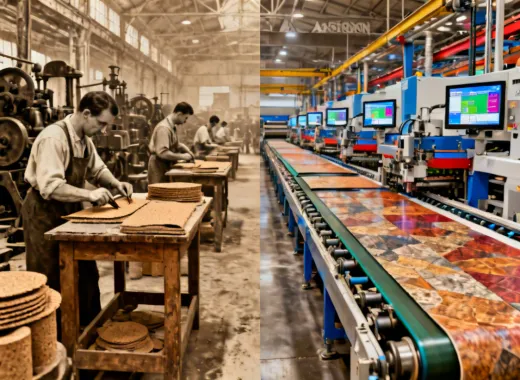

Armstrong history from 1890s factory to modern manufacturing

From Cork Stopper to Global Flooring Leader

1860

The Cork Beginning

Thomas Morton Armstrong starts cutting cork stoppers in a Pittsburgh loft with two workers. Annual sales: $300. The discipline instilled in those early days — doing one thing well — carries through to every product decision 160 years later.

1894

First Floor Coverings

Armstrong enters the floor covering market with linoleum and cork tile, quickly establishing a reputation for material consistency that competitors struggle to match. The company becomes the largest cork products manufacturer in the world within a decade.

1950s

The Resilient Revolution

Armstrong pioneers vinyl composition tile (VCT) for commercial floors — durable, cost-effective, and refinishable. VCT becomes the standard for hospitals, schools, and retail outlets across North America. Our Lancaster, Pennsylvania plant sets the production quality benchmark.

1990s

Ceiling Systems & Acoustic Innovation

Armstrong expands into engineered ceiling tile systems, introducing mineral fiber tiles with measurable NRC ratings. The Cortega tile line, still specified today, is developed during this era. Armstrong becomes a dual-category leader in both flooring and ceilings.

2010s

Luxury Vinyl & Sustainability Push

Armstrong invests in luxury vinyl plank and tile manufacturing at its American facilities. GREENGUARD Gold certification achieved across major residential lines. The ceiling tile take-back program diverts millions of pounds from landfills.

Today

Built for How You Live Now

Armstrong continues to focus on what matters to end users: floors that hold up to actual family life, ceilings that make workplaces quieter, and honest guidance on which product is right for which space. Some things don't need reinventing.

How We Think About Our Work

These aren't wall-poster values. They're the questions our product and quality teams ask on every project.

Honest About Trade-offs

Every material has limitations. We tell you what LVP can't do before you buy it — not after you install it. Contractors who spec Armstrong products rarely get callbacks because we've already flagged the edge cases.

Specs That Are Real

Our wear layer ratings, NRC values, and load ratings come from third-party lab testing. We publish the test methods and the laboratories. You can look them up.

American Manufacturing

The majority of Armstrong flooring sold in the US is made in US plants — Lancaster, PA and Stillwater, OK among others. That means shorter lead times, consistent quality, and jobs that stay local.

Long-Lifecycle Thinking

We engineer products to be maintained, repaired, and replaced one tile or plank at a time — not ripped out and landfilled after ten years. Our sustainability programs have diverted millions of pounds of ceiling tile from waste streams since 2000.

Independent Certifications You Can Verify

We don't ask you to take our word for product quality. These third-party certifications are independently maintained and verifiable.

GREENGUARD Gold Certification

GREENGUARD Gold

UL Environment verifies our products meet among the strictest chemical emission standards for indoor environments, making them acceptable for schools and healthcare facilities.

Scope: Residential LVP/LVT, sheet vinyl, laminate lines
FloorScore Certification

FloorScore® Certified

SCS Global Services tests and certifies compliance with California Section 01350 VOC emission requirements — one of the most stringent indoor air quality standards in the world.

Scope: Commercial and residential hard surface products
ISO 14001 Certification

ISO 14001:2015

Our manufacturing facilities operate under ISO 14001 environmental management systems, documented through annual third-party audits that cover energy use, waste management, and chemical handling.

Scope: Manufacturing operations

Ready to Work With Us?

Whether you're a homeowner looking for one room of flooring, an architect specifying an entire hospital wing, or a school district planning a five-year capital improvement program — our team knows this product range and can recommend what will actually work for you.